
Ukraine: realities | «The Weekly Five»: 08.07 – 14.07
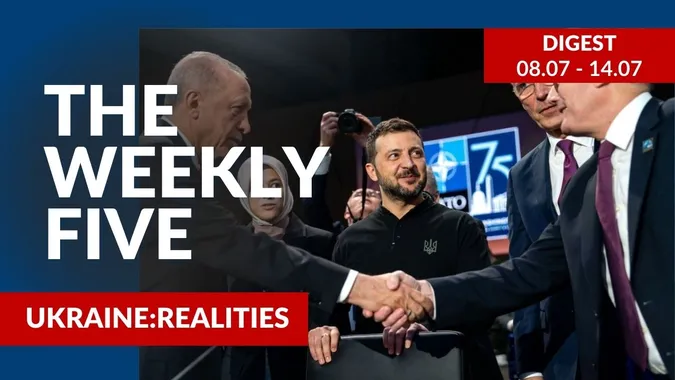
NATO Summit Decisions: Ukraine's Full Membership Becomes Irreversible
Leaders of NATO member states unanimously supported the Alliance's new rhetoric regarding Ukraine's future membership. The summit's decision includes a separate section on political relations with Ukraine, which is more ambitious than last year's Vilnius Declaration. The key difference is a detailed statement that Ukraine's full membership in NATO has no alternative.
"We will continue to support (Ukraine) on its irreversible path to full Euro-Atlantic integration, including NATO membership," the document states.
"Ukraine's future is in NATO," the decision emphasizes. As is known, NATO decisions are made only if no state opposes any of its provisions.
As Alliance officials announced, the summit's declaration also introduces the term "bridge to membership," proposed by the United States, although the decision does not disclose its essence. Instead, the Alliance "welcomes the progress Ukraine has made since the Vilnius summit in democratic, economic, and security reforms" and commits to supporting "democratic and security sector reforms, which NATO foreign ministers will continue to assess through an adapted Annual National Program."
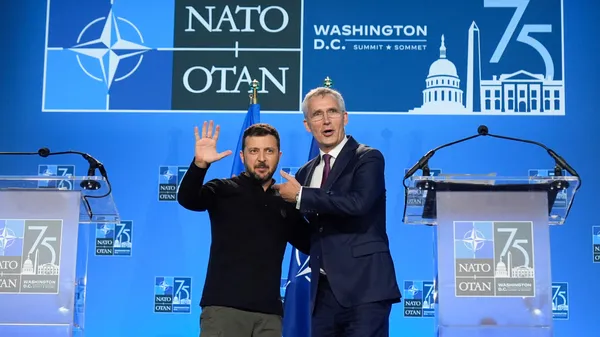
23 States and the EU signed the Security "Ukraine Compact" at the NATO Summit
At the NATO summit in Washington, leaders of states that have signed security agreements with Ukraine met. The leaders of Ukraine, the USA, 21 NATO states, the EU, and Japan signed the "Ukraine Compact," a multilateral document containing commitments to support Ukraine. The document aims to "accelerate collective efforts to meet Ukraine's comprehensive security needs." The signatory states commit to fulfilling their obligations under bilateral security agreements, namely:
1. Supporting Ukraine's urgent defense and security needs, including by continuing to provide security assistance and training in modern military technology and defense industry.
2. Accelerating efforts to build Ukraine's future armed forces.
3. In the event of a future armed attack by Russia on Ukraine after the current hostilities end, quickly and collectively convening at the highest level to determine appropriate next steps to support Ukraine, including providing rapid and sustained security assistance and imposing economic and other sanctions on Russia.
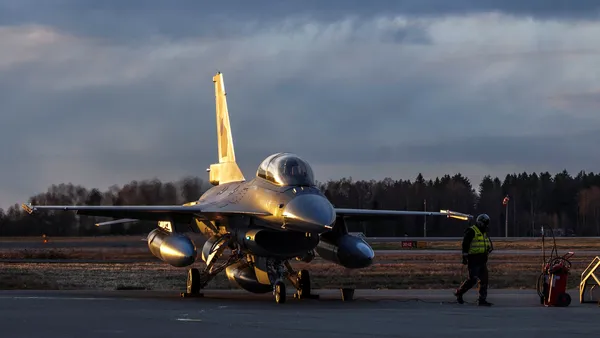
Media: Ukraine Hopes to Receive Six F-16s in Summer and 20 by Year-End
Ukraine expects to receive six F-16 fighter jets from Western partners this summer and a total of 20 aircraft by the end of 2024.
According to people familiar with the matter, the process of sending military aircraft to Ukraine is currently complicated by issues regarding spare parts and the language barrier between Ukrainian pilots and their foreign instructors.
Those involved in this matter are also concerned about the lack of runways in Ukraine and the vulnerability of existing ones to Russian attacks.
According to one source, Ukraine is likely to be able to station a squadron of F-16s, ranging from 15 to 24 aircraft. Another source said Kyiv expects to receive six F-16s this summer and up to 20 by year-end.
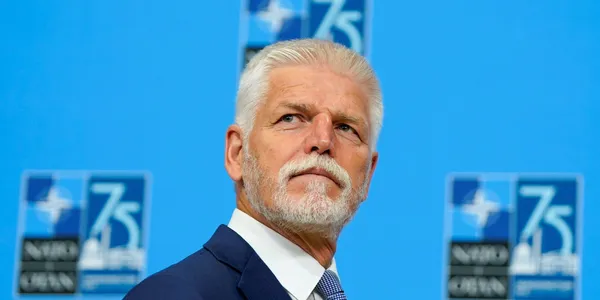
Petr Pavel: Up to 100,000 Shells per Month Will Be Sent to Ukraine from the Czech Republic
Czech President Petr Pavel shared details of the delivery of artillery shells to Ukraine as part of the Czech initiative.
Czech Prime Minister Petr Fiala announced at the end of June that the first shipment of shells under the Czech initiative had arrived in Ukraine some time ago.
At that time, Defense Minister Jana Černochová clarified that 50,000 units of ammunition were involved, with a goal of delivering 500,000 units to Ukraine this year. This quantity is currently financially secured. The first batch of 180,000 units of ammunition is financed by a German contribution.
Pavel stated that in July-August, another 50,000 shells should arrive in Ukraine, and from September to the end of the year, 80,000 to 100,000 shells per month will be delivered.
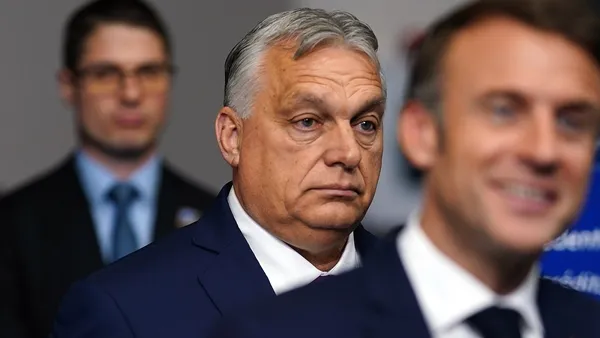
Bloomberg: Orban Opposed Ukraine's Membership at NATO Summit
Hungarian Prime Minister Viktor Orban, at the NATO summit in Washington where President Volodymyr Zelenskyy was present, stated that Ukraine should not join the Alliance.
Orban participated in the NATO summit after announcing a self-proclaimed "peace mission" during which he visited Kyiv, Moscow, and Beijing without any coordination with EU and NATO members.
At the NATO summit, Orban refused to join the military support for Ukraine according to previously reached agreements. He also directly stated at the leaders' meeting, where the Ukrainian president was present, that Ukraine should not become a member of the Alliance.
«Orban even expressed the opinion at the plenary session with Zelenskyy that Ukraine should not join NATO, as we were told. Some leaders objected, and one of them said that Hungary’s history shows why Ukraine should be in the Alliance,» the agency wrote, recounting the discussion that took place behind closed doors.
The project «Ukraine: realities» is implemented by the News agency «Konkurent» together with the Civic Movement «SVIDOMI» in English for readers from other countries to tell to tell about current news and events in Ukraine.
Проєкт «Ukraine: realities» реалізовується Інформаційним агентством «Конкурент» спільно з Громадянським Рухом «СВІДОМІ» на англійській мові для читачів з інших країн аби розповісти про актуальні новини та події в Україні.


На сайті використовуються файли cookie. Для згоди, будь ласка, натисніть «Прийняти». Докладну інформацію можна знайти на сторінці Політика конфіденційності.